


Governed milestone write-back, SymTerra to Oracle Primavera Cloud (P6)
A governed, auditable, human-in-the-loop bridge, automating milestone write-back into Oracle Primavera Cloud for Severn Trent Water.
At a glance
~75
Projects in the governed portfolio
~4,000
Milestone rows, 53 per project
Hourly
Automated sync from Primavera
In production
Live Severn Trent capital portfolio
The challenge
Two versions of the truth, reconciled by hand
The Delivery business unit within Severn Trent Water runs 150+ capital infrastructure projects under the Water Industry National Environment Programme (WINEP), all planned and governed in Oracle Primavera Cloud (OPC / P6).
OPC (P6) held the planned works, while SymTerra captured field progress and actuals, but the two were only manually linked. Reconciling them was manual, slow and error-prone; milestone updates were re-entered into Primavera (P6) by hand, applied inconsistently and lagging behind events.
Across ~75 projects with 53 tracked milestones each, disciplined, timely write-back was effectively impossible, so programme reporting drifted and governance suffered.
The innovation:
A governed digital bridge sitting between SymTerra and OPC as a controlled change-control gate. Rather than pushing field data blindly into Primavera, it surfaces every proposed change for human review, lets Severn Trent approve or reject each one, then writes only approved changes back to OPC automatically, with a complete audit trail.
How it works
A continuous four-stage loop
SymTerra and Movar Reply delivered the solution as a lightweight, serverless web application, using SymTerra's own data platform as the shared warehouse between the two systems rather than standing up a separate database.
Sync
Milestone and activity data syncs automatically from OPC into the shared data platform every hour.
Suggest
Delivery teams suggest changes in SymTerra as work proceeds on site.
Compare
The system presents a side-by-side view of exactly what has changed.
Approve and write back
Severn Trent approves or rejects, approved changes are written back to OPC, and the system re-reads Primavera to confirm the update landed.

Engineering rigour throughout
Bounded OPC request concurrency, retry-with-backoff and session-timeout recovery, full result pagination and batched inserts to guarantee no data is lost.
What changed
Integration treated as a governance instrument
Integrations that move field data into a planning tool are not new; what is novel here is treating the integration itself as a project-controls governance instrument.
Human-in-the-loop change control
Nothing reaches Primavera automatically. Every proposed change is surfaced for review, approved or rejected individually or in bulk, with the option to revert to the original date or suggest an alternative, and a comment can be captured against every decision.
Side-by-side change comparison
Field-level change comparison across two activity vocabularies, presenting a side-by-side view of exactly what has changed before any decision is taken.
Colour-coded milestone tracker
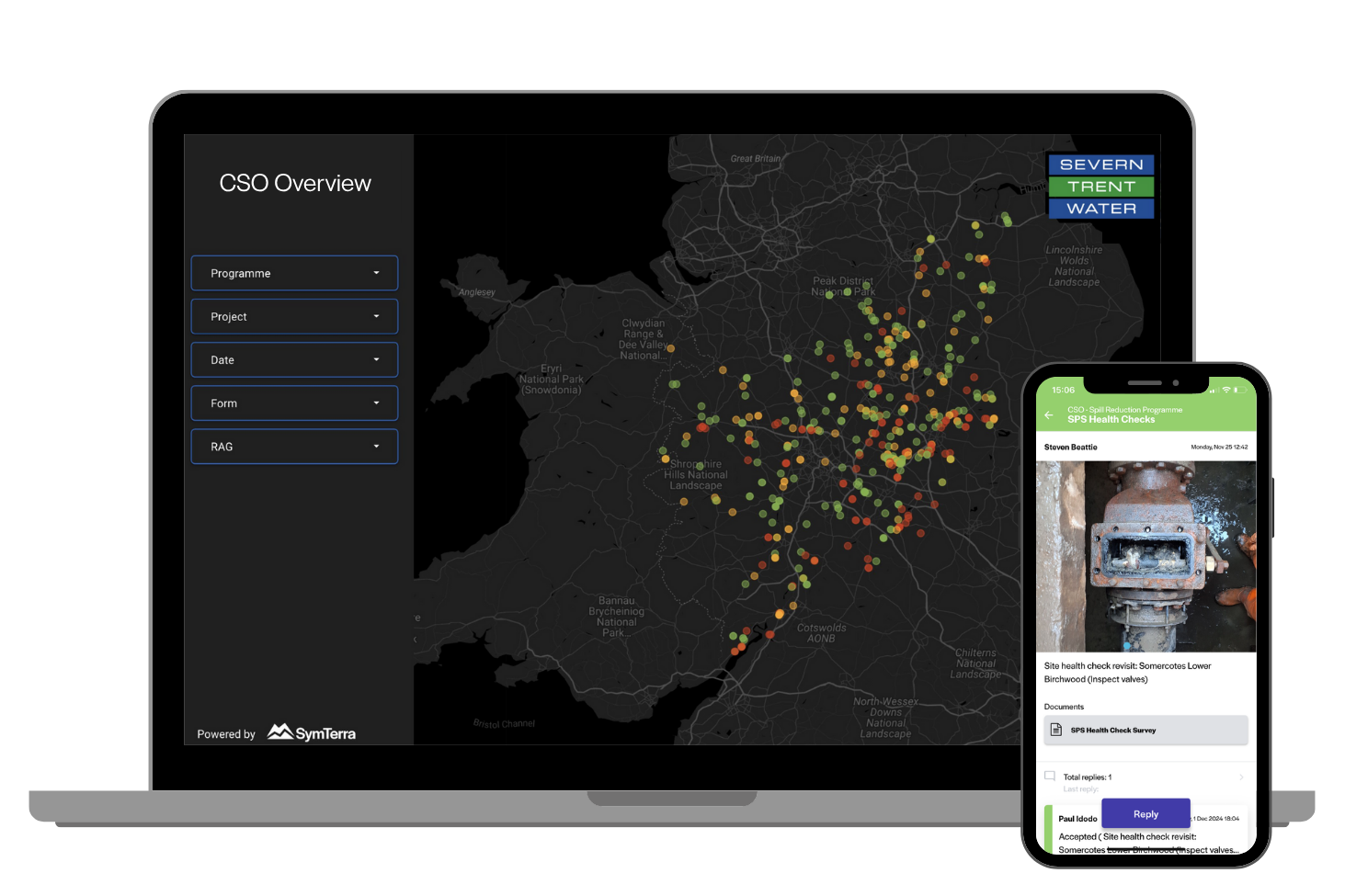
A colour-coded milestone tracker spanning ~75 projects, giving the controls team a single view of milestone status across the governed portfolio.
Purpose-built review workspace
Bulk and individual approve or reject, plus revert to the original date or suggest an alternative date, designed so the controls team retains full ownership of decisions.
Write-back status view
A write-back status view showing pending, completed and failed updates, with per-record write-back status and error capture so failures surface explicitly rather than fail quietly.
Complete, defensible audit trail
Only approved changes are written back, and each is stamped with the user, the time and the outcome. Every decision is attributed and time-stamped, producing a full who, what, when and why record.
Challenges overcome
Trust and reliability at programme scale
The hardest challenges were about trust and reliability, because a governed bridge is only valuable if its data is complete and correct.
Silently dropped projects
Early synchronisation runs used an unbounded parallel fetch across all ~75 projects; Oracle OPC rejected connections beyond roughly fifty concurrent requests, so the sync silently dropped around a third of projects every run. This was identified and solved with a bounded worker pool that limits concurrency to ten requests, ensuring every project is captured on every cycle.
Complete transfer at scale
A second priority was matching the capabilities of each connected system and guaranteeing complete data transfer at scale. Ensuring no data is ever lost, even across large result sets, took significant testing to prove the bridge was fit to manage large, complex programmes of work seamlessly.
Earning the extra clicks
Asking delivery teams to make updates on the app technically added to their workload, and adoption depends on trust. We countered this by linking every update directly to the project schedule and making the resulting audit trail fully transparent, so the extra clicks produced shared, defensible progress in the plan of record rather than private notes that no one else could see.
Handling every activity type correctly
Writing back safely meant handling several OPC activity types correctly and never touching fields we should not. Movar built type-specific field mapping, skipped unsupported activity types, and constrained writes to only the intended fields, backed by a ring-fenced test mode.
Together these turned a fragile prototype into a dependable, production-grade tool.
Results to date
A single, controlled route from site into Primavera
Movar Reply's tool is in production use against Severn Trent's live capital portfolio. For the first time there is a single, controlled route for getting site progress back into Primavera.
Hours
Of manual re-keying removed
Changes are now applied consistently and promptly, replacing hours of error-prone spreadsheet updates.
~4,000
Milestone rows kept aligned
Hourly synchronisation across ~75 projects and 53 tracked milestones each keeps OPC in step with delivery.
100%
Auditable updates
Every update carries a full who, what, when and why audit trail, with confirmation that each change landed.
The benefits
The controls team has confidence in the numbers it reports, having seen and signed off every change, and can trace every update. Tailored update emails covering volume of updates and upcoming activities go to stakeholders daily.
Field intelligence now flows into the programme of record through a single approval workflow, adding a governed OPC write-back capability and proving the data foundation can underpin controls automation.
A repeatable, governed integration capability and credibility in connecting modern field tools to Oracle Primavera for regulated programmes, plus transferable expertise in reliability at scale.
Severn Trent serves more than eight million people. Keeping its capital programme accurately planned and governed helps deliver environmental and public-health improvements on time and accountably.
The partnership
A genuine three-way partnership
The concept of a governed, approval-gated bridge emerged from Movar Reply working alongside SymTerra to solve a problem Severn Trent's delivery team felt daily.
Specialises in project controls, planning and digital delivery, and connected the two systems.
SymTerra
Provided the trusted field-progress platform, its data foundation and the hosted environment the tool runs inside.
Owned the programme and its governance, retaining full ownership of every approval decision.
As Technical Lead and Solution Architect, Yash Desai owned the end-to-end design and delivery: the data architecture, OPC and platform integrations, the serverless back end and the review workflow, collaborating very closely with John Ryan from SymTerra.
Governance was designed in from the start. Nothing reaches Primavera without explicit approval by the Lead Project Manager, every decision is attributed and time-stamped, and new features are proven in a ring-fenced test mode before touching the live portfolio.
Lessons learned
Trust is the product
A governed bridge only adds value if its data is provably complete. Reliability and observability are first-class requirements, not afterthoughts.
Governance accelerates adoption
Approval-gating, attribution and a ring-fenced test mode were precisely what made Severn Trent comfortable letting the tool write to its system of record at all.
Build on the partner's platform
Embedding within SymTerra and integrating its warehouse avoided duplicate data and kept field teams in one trusted tool.
In summary
It treats integration as a governance instrument. Nothing reaches the plan without approval, and every change is traceable, removing hours of manual re-keying while strengthening control. In production on a regulated ~75-project portfolio, it offers the wider profession a reusable pattern for connecting field tools to the system of record without surrendering oversight.
See what a single source of site truth looks like
Find out how SymTerra keeps field progress, reporting and your programme of record in step.
Related case studies
